
Top Figurines for Bonsai Displays: What Fits Best?
Choosing figurines for a bonsai display is mostly a matter of restraint. The right piece adds scale, mood, and a sense of place. The wrong piece competes with the tree and makes the whole display feel crowded.

This guide is meant to help readers narrow down which figurine types fit their display before browsing actual options. If you want to compare pieces first, you can browse bonsai figurines here.
Looking for Bonsai Scene Pieces That Actually Fit?
Mudmen, pagodas, bridges, lanterns, houses, and other quiet ceramic accents usually work better than random novelty decor. If you want to compare the main styles side by side, start with our collection of bonsai display pieces.
What Makes a Figurine Work in a Bonsai Display?
The strongest figurines support the tree instead of stealing attention from it. Usually that means they match the scale of the display, fit the mood of the tree, and give the scene just enough structure without making it feel staged.
Simple figurines usually work better than loud decorative objects. Bridges suggest movement, pagodas add structure, mudmen create human scale, and small houses or lanterns can anchor the setting when the composition has enough space for them.
Quick Guide: Which Figurine Type Fits Your Display?
- If your bonsai display is compact: start with one low-profile piece such as a mudman or lantern.
- If you have a wider tray landscape: bridges, small houses, or pagodas can work because the scene has room to breathe.
- If the tree already has strong character: choose the quieter figurine, not the more dramatic one.
- If you want a calm traditional scene: mudmen, lanterns, or a simple pagoda are usually safer than novelty figures.
- If you want a rustic rural feel: houses, water buffalo, or grounded animal accents usually fit better.
- If you are unsure: start with one modest figurine and stop there. It is much easier to add than to recover from a crowded display.
Top Figurines for Bonsai Displays
1. Mudmen Figurines

Mudmen are one of the easiest bonsai figurines to place well because they add human scale without demanding too much attention. A single seated or standing figure can make a display feel more settled and intentional.
Best for: Traditional bonsai scenes, mature trees, and displays that need a quiet human element.
Use carefully when: The composition is already busy or the figurine feels too expressive for the tone of the tree.
Common mistake: Using several human figures at once and turning the display into a tiny stage set instead of a bonsai scene.
2. Mini Pagodas

Pagodas work best when you want a stronger architectural anchor. They can add vertical structure and a sense of place, but they need enough room around them to avoid overpowering the display.
Best for: Larger bonsai compositions, tray landscapes, and scenes with enough open space to support a focal object.
Use carefully when: The tree is compact or visually dense. In small displays, a pagoda can take over fast.
Common mistake: Choosing a pagoda that is too tall or too detailed for the tree, so the viewer notices the structure before the bonsai.
3. Mini Stone Bridges

Bridges create direction. Even without real water, they imply movement across the scene and help connect gravel, moss, rock groupings, and open soil into one layout.
Best for: Wider bonsai compositions, tray landscapes, and scenes with multiple ground elements.
Use carefully when: There is no believable path or transition for the bridge to connect.
Common mistake: Dropping a bridge into a compact pot where it has nothing to connect and feels decorative rather than necessary.
4. Stone Garden Lanterns

Lanterns are lower-profile than pagodas and are usually easier to place in restrained scenes. They add structure without asking for too much attention.
Best for: Moss-heavy displays, understated scenes, and layouts where the tree should remain clearly dominant.
Use carefully when: The display already has several hard visual elements like large rock groupings or heavy deadwood.
Common mistake: Treating a lantern like filler. If it has no relationship to the rest of the ground plane, it still feels random even when it is small.
5. Clay Cottage Houses
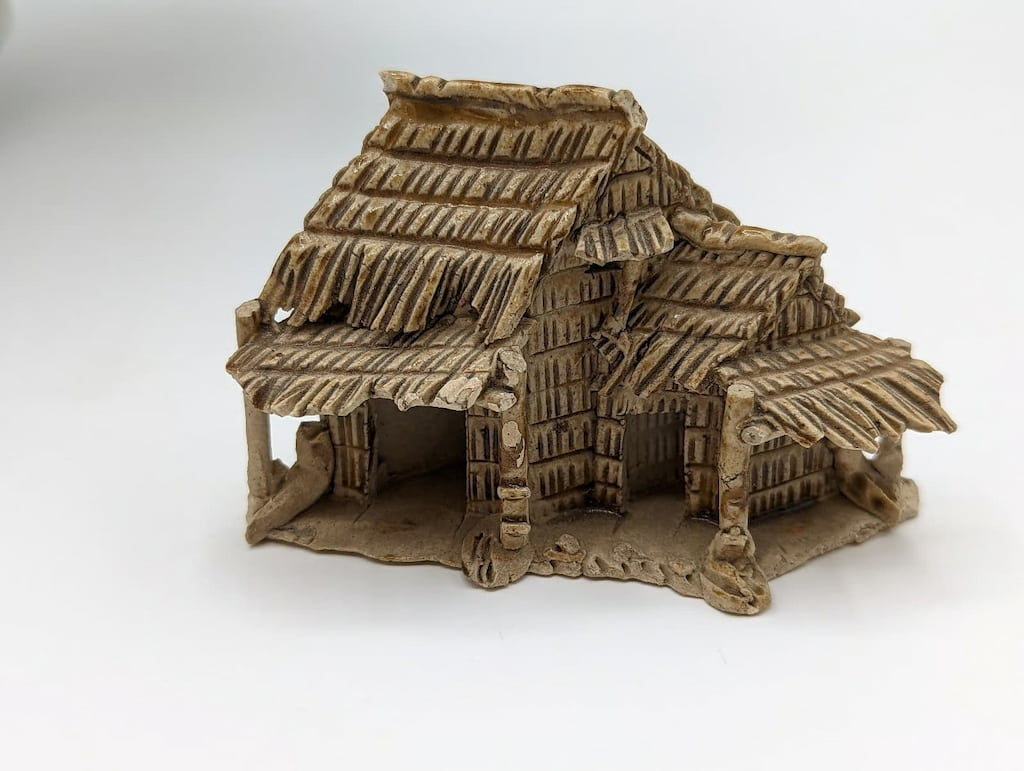
Small houses can work very well when the planting has enough space to support a village or hillside feel. The usual mistake is scale. One simple house often works better than several detailed ones.
Best for: Rustic landscape scenes, larger bonsai arrangements, and displays with a clear ground plane.
Use carefully when: The display is too compact to support a building without feeling toy-like.
Common mistake: Using a house in a display that has no visual room for a setting around it, which makes it look dropped in rather than placed.
6. Fisherman Figurines or Seated Figure Sets


Human figurines with a clear action or posture can make a bonsai display feel more lived-in. A fisherman, seated pair, or similarly calm scene usually works better than exaggerated novelty figures because it supports the composition instead of hijacking it.
Best for: Reflective scenes, scholar-style displays, and compositions with enough space for a clear narrative cue.
Use carefully when: The figurine starts telling a louder story than the tree itself.
Common mistake: Picking a figurine because the story is cute, even though the mood clashes with the age, weight, or style of the bonsai.
7. Water Buffalo Figurines

Water buffalo pieces feel more grounded than many decorative animal figures because they fit naturally into rural and traditional scene-building. They work best when the display has enough room to support that story.
Best for: Rural bonsai scenes, traditional landscape compositions, and larger displays.
Use carefully when: The scene is too formal or minimal for a rustic animal element.
Common mistake: Forcing a buffalo into a highly refined or architectural display where it pulls the mood in the wrong direction.
8. Small Ceramic Animal Accents


Animal accents can add life to a bonsai scene, but they work better when the choice feels grounded and the scale stays modest. Use them as support pieces, not as the main event.
Best for: Forest-floor scenes, rustic layouts, and displays that need one small movement cue.
Use carefully when: The animal is oversized, overly cute, or disconnected from the scene's tone.
Common mistake: Choosing the most eye-catching animal instead of the one that quietly supports the display.
How to Choose the Right Figurine Type
Start with scale
Proper scale is what makes miniature scenes believable. Large bonsai can handle slightly larger accents, while smaller trees usually need simpler and quieter pieces. If the figurine is the first thing you notice, it is probably too dominant.
Match the mood of the display
A rugged old trunk, a formal upright, and a playful tray landscape do not all want the same type of figurine. Mudmen, bridges, pagodas, lanterns, and small houses are usually easier to match than novelty decor because they support the composition instead of fighting it.
- For calm, contemplative displays: mudmen, lanterns, and simple pagodas are usually the safest choices.
- For rustic or rural scenes: houses, buffalo, and grounded animal figures tend to fit better.
- For more architectural scenes: pagodas and bridges work best when the layout already has space and structure.
Choose by display type, not just by object type
Compact pots usually suit one quiet accent at most. Wider tray landscapes can support bridges, small houses, or more defined scene building. If your bonsai display is tight, start smaller and simpler.
Use fewer pieces than you think
One well-placed figurine usually does more than three average ones. If you want variety, keep a small rotation of pieces and change them occasionally instead of crowding the display all at once.
If you want more practical placement help, read this guide to styling ceramic figurines with your bonsai.
Placement Tips That Keep the Tree Dominant
Leave breathing room around the trunk
Do not crowd the base of the tree. Figurines work better when they sit slightly off-center and support the layout instead of hugging the trunk too closely.
Give each figurine a reason to be there
A bridge should seem to connect two areas. A house should feel placed rather than dropped in. A human or animal figure should help the display feel inhabited, not random.
Check the display from normal viewing distance
A figurine that seems subtle up close can become the first thing you notice from a few steps back. Before you commit, step back and check whether the tree still reads as the main subject.
Stability matters
If you use lightweight or narrow-base pieces, make sure they sit securely on soil, moss, or stone. Wider flatter bases are usually easier to place well than tall pieces with a tiny footprint.
Frequently Asked Questions
Will figurines damage my bonsai roots?
No, as long as they are small and placed on the surface. Avoid burying large bases deep into the root ball, and do not block drainage.
Can I leave bonsai figurines outside in winter?
It depends on the material. High-fired ceramic and stone are usually better outdoor options than low-fired clay or more fragile decorative materials.
How do I clean bonsai figurines?
Use a soft brush and water. Avoid harsh chemicals that may affect the soil or surrounding moss. If you want a simple care routine, read how to clean bonsai figurines safely.
How many figurines should I use in one bonsai display?
Usually one or two. Larger tray landscapes can support more, but most bonsai displays look stronger when the tree stays clearly dominant.
Conclusion
The best bonsai figurines are usually the ones that support the tree quietly. They add scale, suggest a setting, and make the display feel more complete without overpowering the composition.
If you want to compare mudmen, pagodas, bridges, houses, fisherman pieces, and other ceramic accents in one place, see bonsai figurines for your display here.